
The Thermostat Says Sixty-Eight. She’s Wearing Two Sweaters.
In Los Angeles nobody believes cold is a risk. But a house sitting in the low sixties costs an aging parent more than comfort. What to look at this month.
Written by Patrick Mapile — founder of CarePali, Navy veteran, and licensed vocational nurse (LVN).
Follow along in any reader — subscribe via RSS.
In Los Angeles nobody believes cold is a risk. But a house sitting in the low sixties costs an aging parent more than comfort. What to look at this month.

Families hand over the errands and keep the bath. It is the wrong order — and what keeping it costs is not your back.

Supervision is the part of home care that looks like nothing and prevents the most. What a quiet hour is actually doing — and how to tell when it isn't.

The nights nobody counts are the ones that end home care. What your parent’s night actually asks for — and why sleeping on alert is not coverage.

A parent can sound completely fine for eight minutes while struggling with everything the call never tests. What the Sunday call hides, and how to fix it.

Most home care that fails, fails in the first two weeks — and almost never over the work. What to do in the hour before the caregiver arrives.

Your parent refusing home care usually isn’t about the caregiver. What the “no” is really protecting — and the first ask that’s small enough to get a yes.

A skipped compartment is a data point, not a diagnosis. The four things it usually means have very different fixes — and only one of them is memory.

Families assume the supplies are covered. They are not, and Medicare says so in one line.

A Red Flag Warning is the week to act. Find your parent's evacuation zone, sign up for alerts at their address, and name who is actually driving.

One sibling sees decline, the other sees a bad week. How families break the deadlock that quietly costs a parent a year of help.

A nearly empty refrigerator in an aging parent's house is rarely about appetite. What the trash, the dish rack and a new belt notch actually tell you.

A burned-out bulb in an aging parent's house is rarely about the bulb. What a dark hallway says about his eyes, his balance, and what he will not say.

He brings the cane to appointments and leaves it by the front door at home, where he crosses the living room hand over hand along the furniture.

The appointment happened, the money was spent, and the hearing aids are in a drawer.

You are the one who knows the medications, the pharmacy and who has the spare key — which makes you the single point of failure. Here is the one-evening fix.

The hospital stay is the visible event. The real risk is the weekend after a Friday discharge, when every clinic behind you closes until Monday.

Pet care is the last routine an older adult gives up. When it slips, it is usually telling you something the person cannot.

Medicare plans must mail their Annual Notice of Change so it lands by September 30.

Bathing is the first daily task most older adults give up, and the reason is almost never stubbornness.

A parent who has quietly stopped sleeping lying down is telling you something. What the chair can mean, and what to write down before the next visit.

Feet are the one part of an aging parent's body that nobody checks — not you, not him, and often not his doctor.

Every August my phone fills with adult children home from a summer visit who can't shake something they saw. You weren't imagining it. Here's how to read it.

Missed payments and slipping credit scores show up years before a dementia diagnosis — researchers found the money notices before the family does.

A folded flag and a DD-214 in a hall closet. VA Aid and Attendance can pay a real monthly amount toward care at home, and most families never hear of it.

The pharmacy, the market, the doctor, his brother's house. A shrinking driving map has a name in the research, and it is an early signal worth reading.

At 2 a.m. in a hospital hallway, someone will be asked what your parent would have wanted.

She says she is just not thirsty. She is rationing — because getting to the bathroom stopped being automatic, and she will not say so.

Quartering the apple, ordering the soup, skipping the dinners he used to host. A mouth that stopped working reads as preference, and Medicare skips it.

The service was full. The month after it is where grief actually lands on an older adult — and where a family can change what happens next.

Four days in a hospital bed can still count as "outpatient." The observation-status trap, and the four questions that protect your parent's rehab coverage.

The family settled on depression: he had quit church, the senior lunch, even his granddaughter's graduation. The tell was that he had also quit coffee.

Six behaviors families read as early dementia are often an aging parent who simply cannot see well enough to read her own mail.

Families read it as early dementia. Clinicians read it as a room with bad acoustics.

Coughing on every sip can be early dysphagia, and the silent version shows no cough at all. What to watch at the table, and why pneumonia follows.

Sudden confusion in an aging parent is almost never dementia starting. What it usually means, and why the next 48 hours matter more than any others.

On the Westside we assume the ocean breeze handles the heat — until it doesn't, and the people most at risk are the ones who never feel it coming.
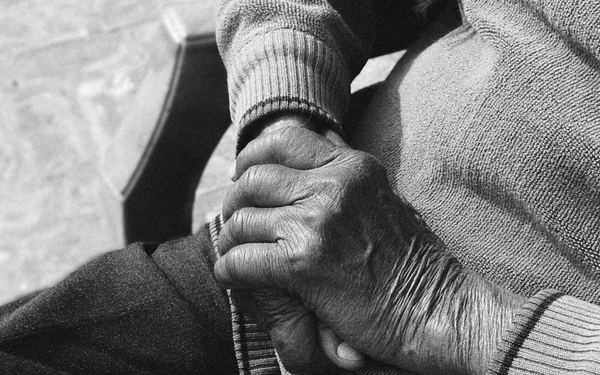
A nurse counts four things before taking his shoes off — a curled rug, three pharmacies, the grunt getting out of the recliner.

According to the Insurance Institute for Highway Safety, drivers over 70 have higher crash death rates per mile driven than middle-aged drivers.

Nearly one in two adults over 65 at home is malnourished or at risk. When a parent eats less it is rarely just appetite — here is what it signals.

Medicare pays for skilled home health, not for daily help with bathing, meals and company. Where the line falls, and what families actually pay.

Most older adults and their families have made a quiet peace with disrupted sleep. Your parent wakes up at 2am.

Independence rarely disappears all at once. How the slow erosion of daily life shows up in an aging parent, and when a family should step in.

A study across 24 countries and 101,000 people ties low social contact to weaker memory and thinking. Who your parent talks to matters to the brain.

77 percent of adults over 50 want to stay in their own homes, and the numbers are finally following. What West LA families weigh, and what it costs.

Families notice memory changes about 2.8 years before a diagnosis arrives. How to tell ordinary aging from the kind that deserves attention now.

53 million Americans care for an adult relative, and many show real signs of depression. Burnout is a predictable response, not a character flaw.

The Surgeon General called loneliness an epidemic, with effects likened to smoking 15 cigarettes a day. What isolation does to an aging parent in LA.

One in four adults over 65 falls this year, and 80% of home falls happen in one room.

More than 40 percent of older adults take five or more prescriptions. The question is not only what your parent takes, but why each one is still there.

This Father's Day, an estimated 10 percent of American adults are providing care to a parent over 65, according to the Pew Research Center.

About 1 in 10 Americans over 65 experiences elder abuse, and most cases are never reported. The forms it takes, the warning signs, and prevention.

Chronic insomnia affects 30 to 48 percent of older adults, and most never raise it with a doctor. Poor sleep is not simply part of getting older.

The first week after hospital discharge is statistically the most dangerous period in an older adult's care journey.

More than one in three adults over 65 will fall this year — and roughly two-thirds of those falls happen at home.

Adults over 65 account for the highest share of heat deaths in the US, and LA heat waves are intensifying. How to keep an aging parent safe.

Malnutrition among older adults living at home is one of the most prevalent yet underdiagnosed health crises in the United States.

One in four American adults is raising a child and helping an aging parent at the same time. You are not failing at either role — how to carry both.

According to the U.S. Department of Veterans Affairs, approximately 16.2 million veterans are alive today — and nearly half of them are over age 65.

According to the Alzheimer's Association, six in ten people living with dementia will wander at least once — and many will do so repeatedly.

There’s a sentence I keep coming back to: When I’m at my best, I’m calm. It sounds like a wellness quote. It isn’t.

Families wait two to three years between the first warning sign and the first call. Missed pills, spoiled food, quiet falls, and where the line is.

In my family, nobody ever asked who would take care of Lola. The answer was already in the room. That’s not a virtue I’m bragging about.

Routine surgery on paper, weeks of recovery in practice. What being the patient taught me about the side of recovery families never get to see.

Live with someone and your eyes adjust until the decline becomes wallpaper. The five things a nurse notices in the first sixty seconds in a room.

More than one in four Americans over 65 is socially isolated, with consequences that are measurable and medical, not merely emotional discomfort.

What Medicare's home health benefit actually covers, for how long, and under what conditions — and where West LA families keep guessing wrong.

Home-based physical therapy matches or beats clinic therapy for many older adults, without the drive, the fatigue, or the abandoned program.

She was told her father qualified for home care, then opened a $4,200 bill. The distinction to understand before the next discharge or fall.

Medicare’s GUIDE Model launched in July 2024 with a $2,500/year respite benefit for dementia families — and most West LA families have never heard of it.

Medicare quietly stopped paying for activity and started paying for outcomes — keeping seniors out of the ER, out of the hospital, and at home.

Mother's Day is built around celebration — flowers, brunch, gratitude for the woman who gave everything.

It's the most common conversation I have with families: I can see clearly that my parent needs help, the signs are unmistakable, and they refuse it.

The average adult over 65 takes between five and seven prescription medications a day. About 40% take five or more.

A parent who was calm and conversational at lunch becomes agitated, confused, or frightened by dinnertime. Pacing. Arguing with shadows.

License, insurance, caregiver consistency, and who picks up at 2 a.m. The questions I would want my own family to ask before hiring anybody.

Most older adults I meet on the Westside want the same thing: to stay in the house they've lived in for thirty or forty years.

Aide turnover near 65 percent and LA rates up 15 to 20 percent. What has shifted this year, and what it means for a Westside family choosing care.

53 million Americans are providing unpaid care to an adult family member right now. The average caregiver dedicates 24 hours a week to it.

One in four adults over 65 falls every year. The CDC counts about 36,000 deaths and 3 million ER visits from falls annually.

Almost half of 30-day readmissions happen in the first week home. Written from inside the bed and across it, with the moves that lower the risk.

GUIDE is a Medicare program running through 2032 covering dementia care planning, a 24/7 support line, and up to $2,500 a year in respite care.

About one in five Medicare patients is readmitted within 30 days — most of it in the first seven.

Deconditioning begins within 24 to 48 hours of bed rest, and older adults can lose 2 to 5 percent of muscle strength a day.

Hospitals say “cleared to go home.” They mean cleared with support in place — and families hear only the first half.
No articles matched .
Try a broader term, or book a discovery call and ask Patrick directly.
Not a sales call — a careful and operational read on your loved one's situation, your family's needs, and whether CarePali is the right fit. Patrick personally leads every discovery call. If we're the right team, we'll show you exactly what care would look like for your situation. If we're not, we'll tell you who in the area is.
Prefer to talk first? Call or text (310) 818-3217.
Before you go
Not sure what your parent actually needs?
Ninety minutes in the home with Patrick, then a written care plan in your inbox within three days. $450 — and the plan is yours to keep. You keep the plan whether or not you ever hire us.